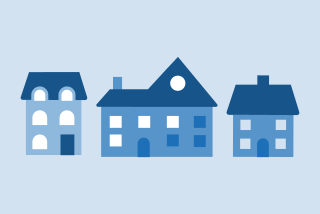
Objects and props
When creating objects and props use real-life reference images as a starting point and simplify them into clear geometric forms to communicate narrative and context effectively.
Illustrating objects and props
Real life images
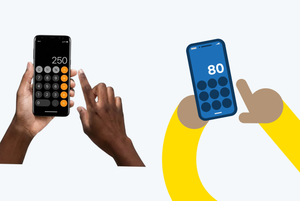
Use real life reference photos and minimal detail and where possible, less is more.
Break down objects into geometric components and/or simple shapes.
Create a narrative
Suggest a narrative by layering symbols to build meaning. For example, placing an upward arrow inside a toolbox can imply productivity.

Standalone objects
Use standalone objects and items, or create a simple context for them, for example a calendar page being turned.

Perspective
Maintain a flat aesthetic, using stylised perspective only when a flat view reduces clarity. In this image, depth is suggested through different shades of blue from our palette to show a ballot paper being placed into a ballot box.

Buildings and landscapes
Maintain authenticity by basing buildings on photographic references of real, diverse UK structures, depicted with squares, dots and with minimal detail.